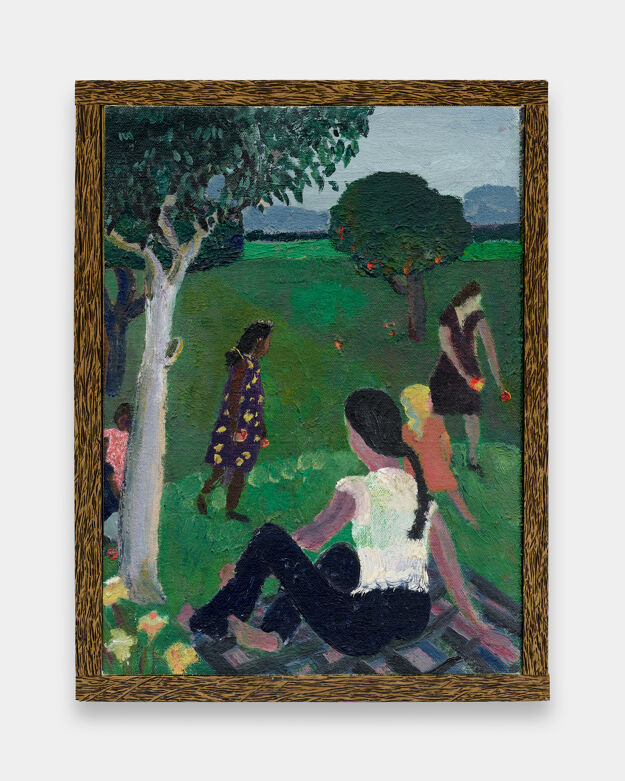
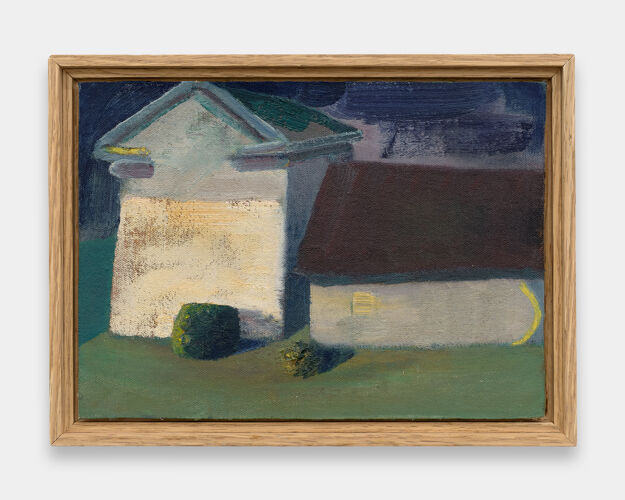
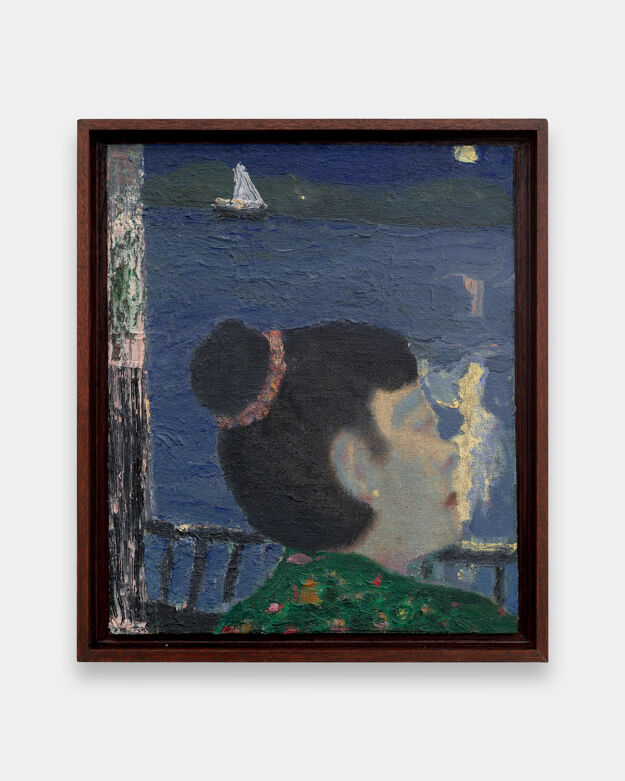
In Heichel’s paintings, observation becomes both an act of courage and concealment. Working from life in public and private spaces, the artist describes the experience as “confrontational” – a quiet tension between artist and subject, between the desire to see and the wish to go unnoticed, the known and the unknown. His figures, often turned away, asleep, or absorbed in their own worlds, inhabit scenes of fleeting intimacy. Faces are roughly formed, limbs dissolve into motion, and yet something essential remains – the pulse of ordinary life as it unfolds unguarded.
Heichel’s process begins in the open – in parks, cafes, streets – where he sketches quickly and discreetly, attuned to the energy of people as they move through shared spaces. He deftly captures scenes of intimate interiors, urban encounters, and leisurely moments in the garden or by water, recalling the early subway scenes by Mark Rothko, the enigmatic lakeside landscapes of Edvard Munch, or the dappled domestic vignettes by Édouard Vuillard. “By working surreptitiously,” he notes, “the people around me carry on as they would, which is what I’m interested in.” Later, in the solitude of his studio, these fragments expand into more personal narratives. What began as a transcription of reality merges with memory, emotion, and imagination.