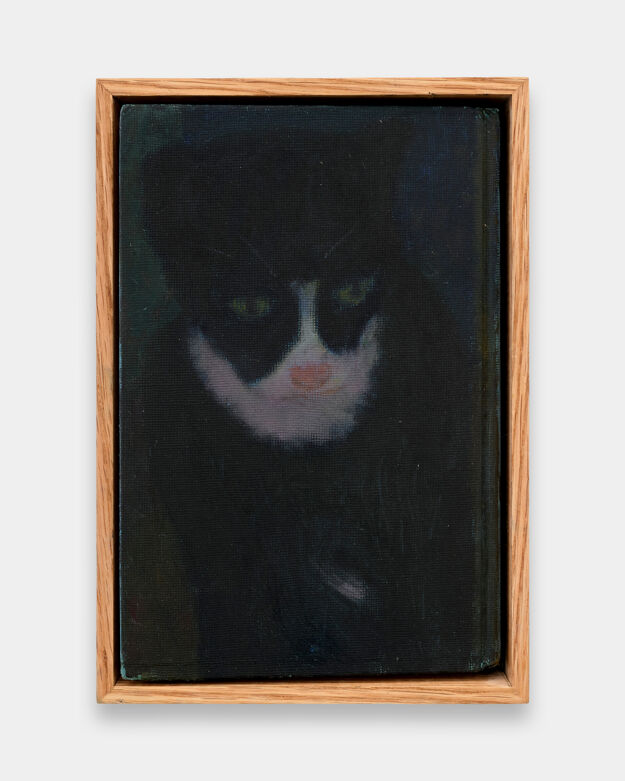
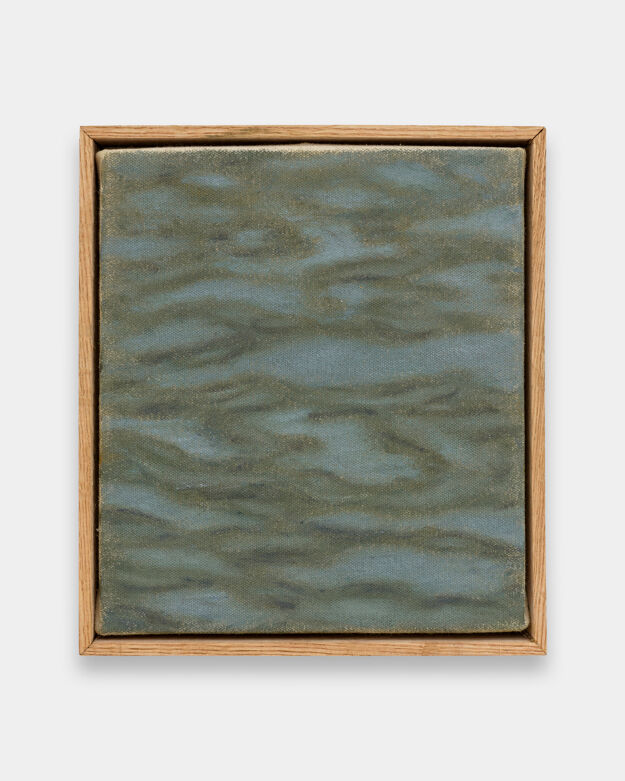
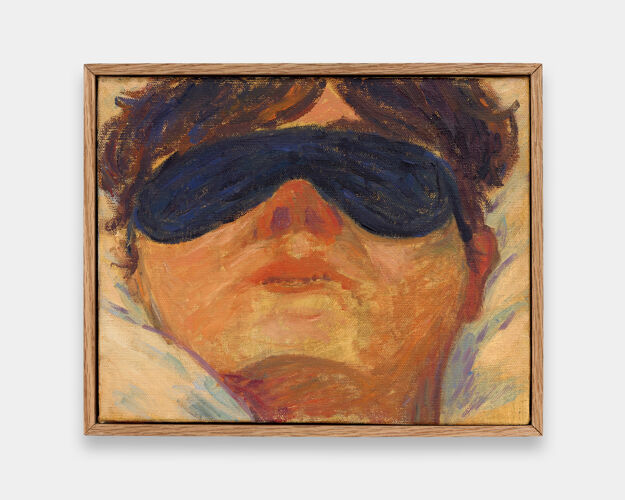
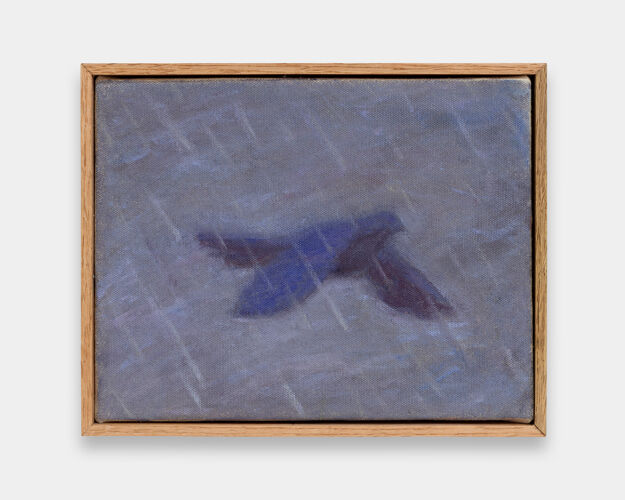
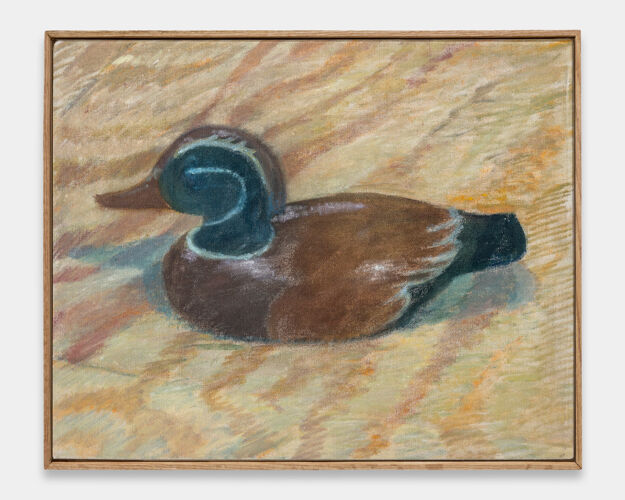
Jackson's work centers on moments that linger for their quiet resonance. He pursues not representation, but the felt truth of a scene—how a shadow advances across plaster, how muted light gathers behind a curtain, how the weight of an object holds a room. These images carry a charge of presence and absence, something sensed rather than fully seen.
His process is deliberately attentive: he keeps records from morning walks as if collecting evidence; he leafs through second-hand books for images and sentiments, then at times wraps a book in canvas and paints it closed, allowing the source to remain present without illustration. Layer by layer, memory, perception, and feeling settle into the surface.
The paintings are not about daily life; they move among it—participating alongside its small shifts, granting it dignity through sustained attention. Joyce works intuitively and with restraint, so that color, value, and texture do the speaking, and the picture lands at a temperature that feels true to how the moment lives in the mind.