Isabelle Friedrich McTwigan
SPOTLIGHT
Isabelle Friedrich McTwigan
We visited Isabelle McTwigan's Greenpoint studio to chat about the work on Platform, her process, and what she's working on now.
Thank you for having us over, it's nice to be here!
Welcome! I cleaned it up for you. I’ve regretted cleaning up, but doesn’t look so clean that there’s nothing here. There’s texture. There’s such a difficult balance between letting someone be in here without worrying about getting paint on themselves, but also accepting that that’s okay.
It looks lovely. What's going on with the wing mirror and a rear-view mirror on your workbench? They make a great tableau!
I actually made a rear-view mirror out of glass. It’s about an object having meaning without being iconic—a non-icon becoming an icon, and the beauty of the mundane.
So cool and so different from the style of work we have on Platform. Thanks for bringing those out as well.
It’s weird. You chose works that I’m very attached to, which made me pause. But that’s a good sign.
Three of the works on Platform installed in the studio.
I think so! Could you talk a little bit about the work — maybe the candle to start? I know you went through a candle phase of sorts.
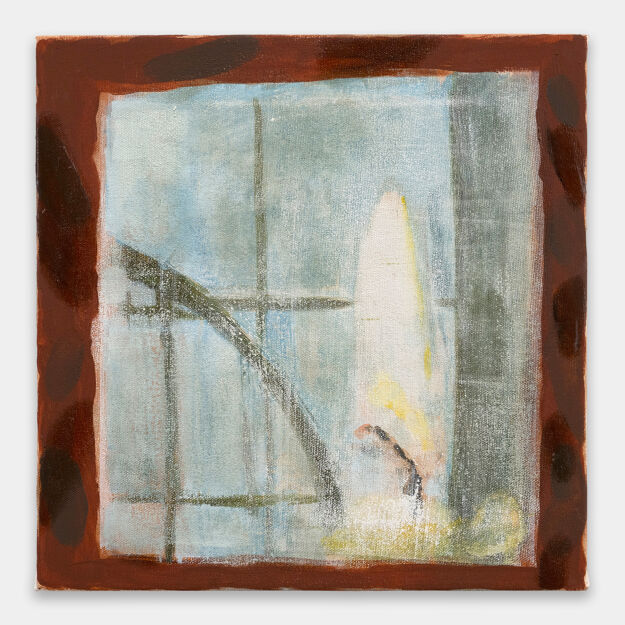
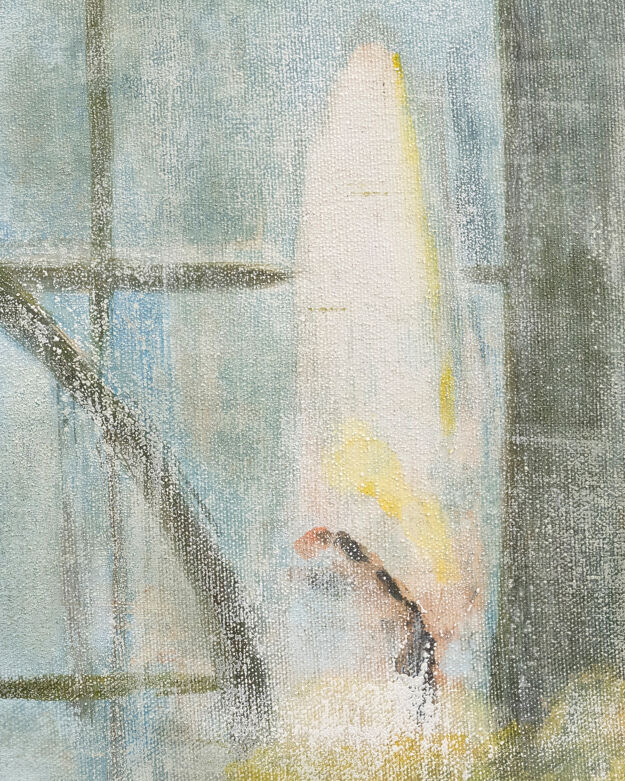
I did! I made candles for about two years straight. I worked on the candle in every variation I could think of—the candle as a rubbing, the candle as an image. This particular piece was really fun because I was thinking about it in terms of trompe l’oeil. This was when I started thinking about trompe l’oeil as its own effect.
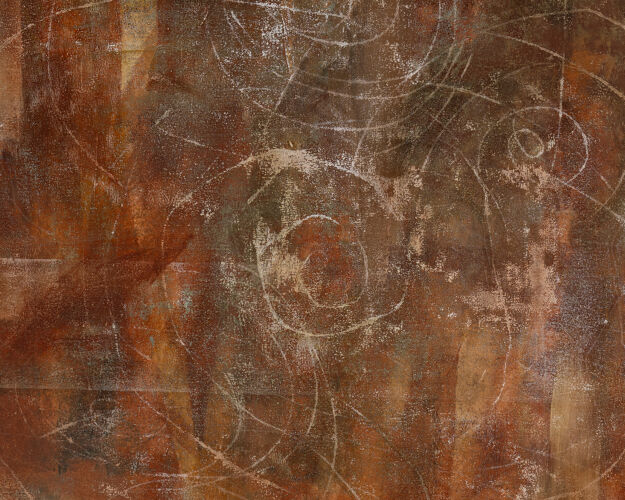
It's one of two works where one is a painting and the other is a transfer. I copied the transfer as a painting and tried to replicate the dappling in paint, and this is that painting. The candle series became a way to use one motif to move through different ways of painting. That’s when things started to get more abstracted.
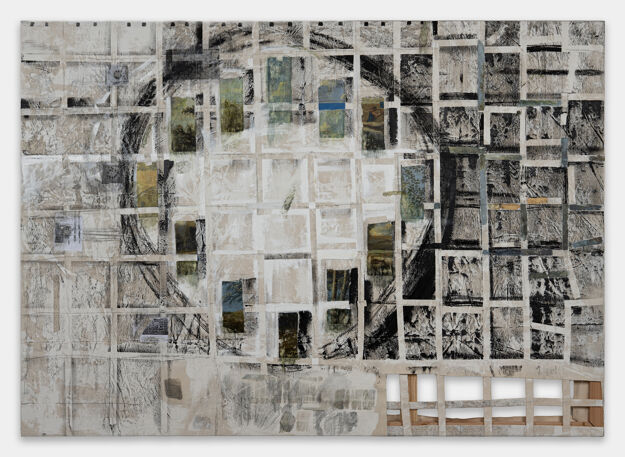
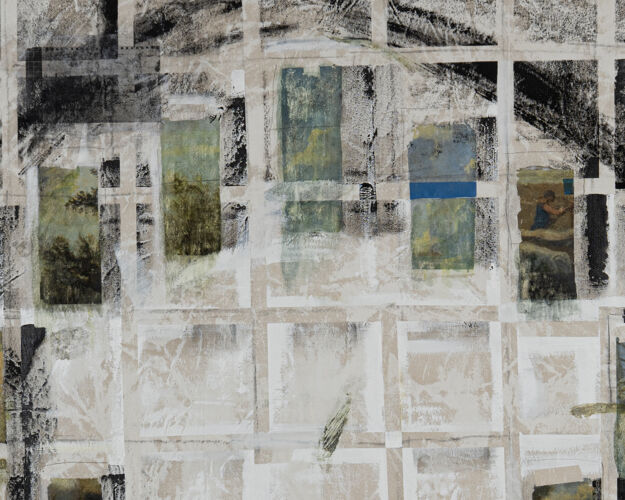
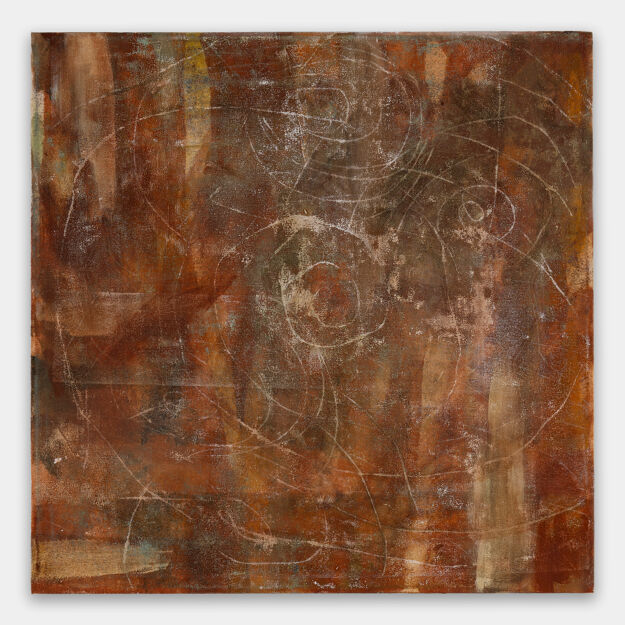
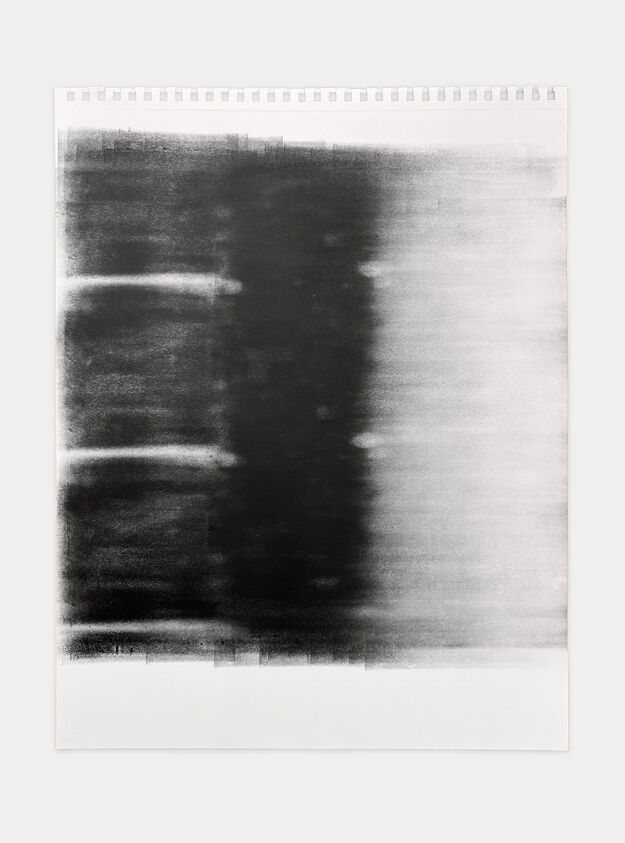
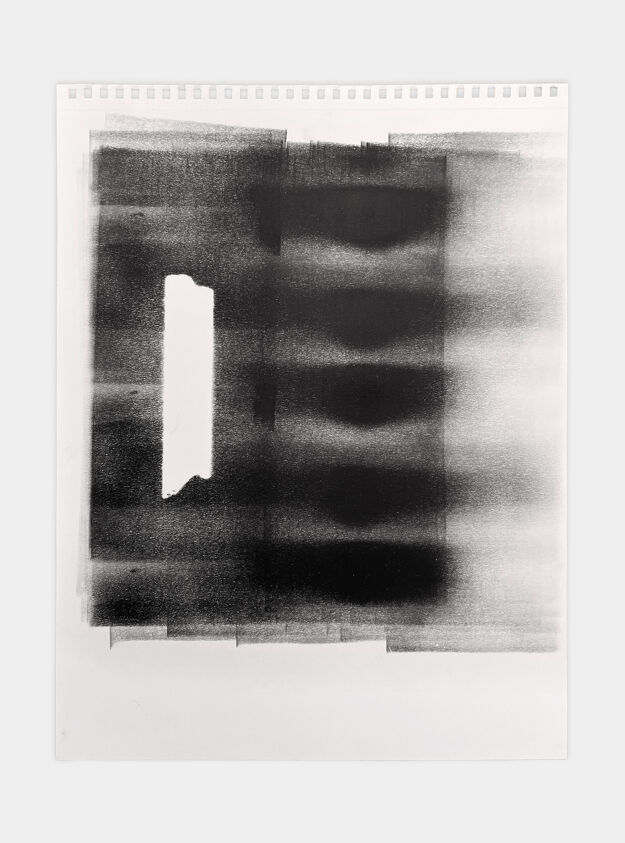
This textual language—painting gestures, replicating printmaking, and actual printmaking—started pushing through into other pieces. All of these works have printing elements within the painting.
When you say transfer, is it generally a photo transfer?
Yes, I typically I use acetone.
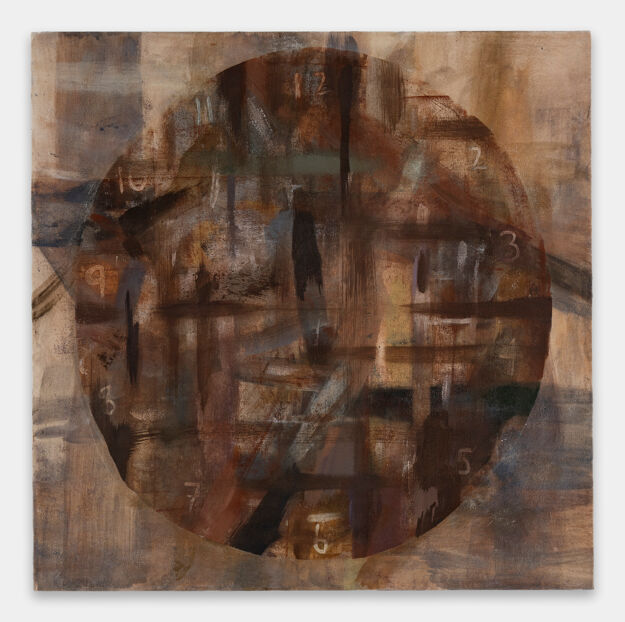
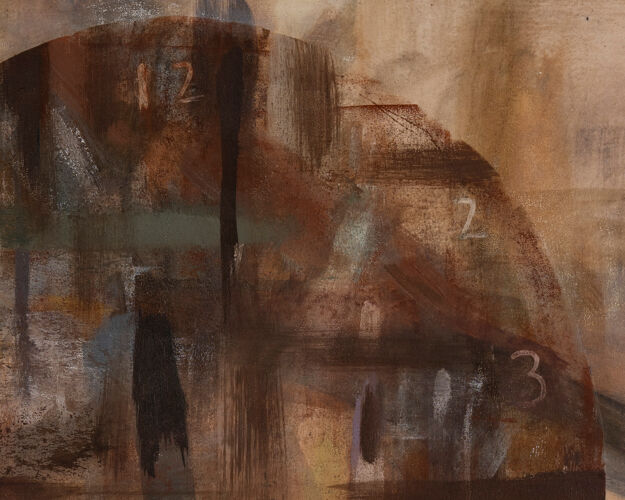
I really liked the look of acetone, and I have access to fresh air, which makes a huge difference. I’m starting to experiment with other ways of doing transfers. For the large clock piece, I did a medium transfer, and these pieces on the easel use medium transfer—you apply the medium, then rub off the paper.
It gets very messy, but it makes for a cleaner image and a completely different effect. Now I’m experimenting with agitating the image through paint rather than through technique.
A medium transfer on a work in progress.
What are you working on at the moment?
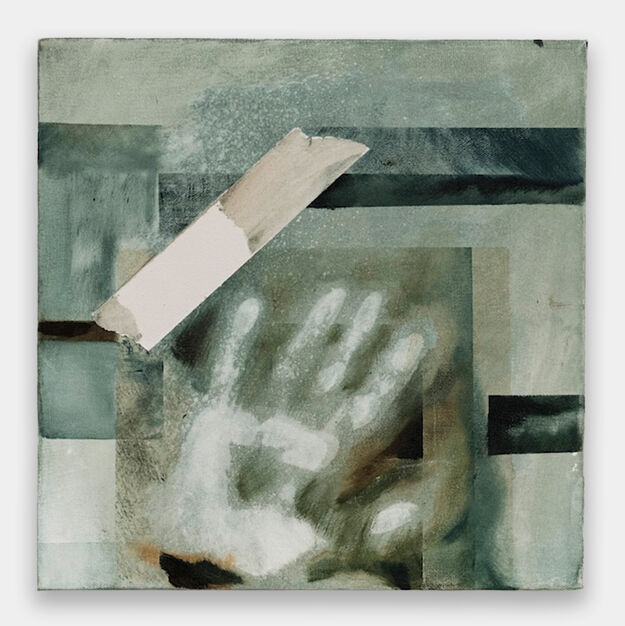
I’m in a strange place right now. I searched “sunset” in my phone because I’d been thinking about traditional symbols I was using—the hand—and how they became more abstract with tape. A lot of these images feel temporal, and that’s what drew me to them.
Now I’m photographing images on my computer, printing them out, re-photographing them, and printing them again. Then I project them onto canvases, re-photograph them, and continue the cycle.
With the clock, I didn’t want to paint a clock. I wanted to make a painting that was a clock. Now I’m thinking about movement—what is a painting that is movement? I don’t know yet. I’m very much in the middle of it.
Just to clarify—this painting here is a painting of a photograph of a projected photograph, which is a photograph of a printed image that came from a photograph of a computer screen? That's where we are?
That's where we are!
Could we talk about the hand?
Isabelle Friedrich McTwigan: Deceives the Face, 2024, Oil on canvas, 12.0 × 12.0 inches
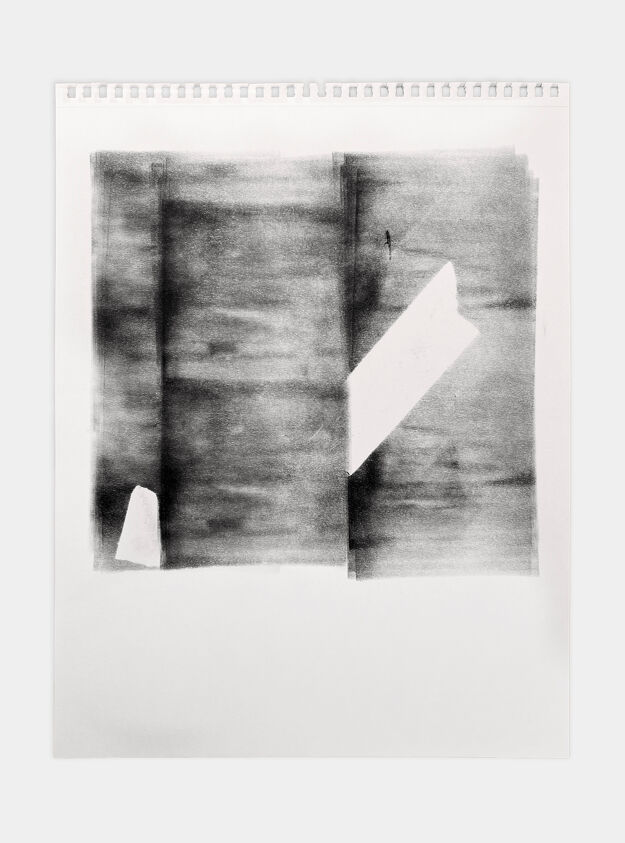
Sure. As I started using tape and letting it have its own personality, I began thinking about objects having real-world scale.
Real scale introduces something factual into the illusion of painting. Painting as a window, but with something real embedded in abstraction. That shift changed the subject matter and the experience of the work. I was thinking about perception, illusion, and how images circulate now—how you don’t know scale until you see something in person.
I liked the idea of paintings where viewers have to understand scale. The awkwardness of a hand within something larger constantly pushes you out of the illusion.
And the lemons next to the mirrors—are those also a work? They also have such recognizable scale.
Yes but I haven’t displayed them yet. I kept lemons in the studio because studios are dry and they harden beautifully. Then I slipcast them.
I don’t know what they’re going to be yet, which is probably why they’re still here. I haven’t figured out how to part with them.
McTwigan handles a selection of her slipcast and glazed lemon sculptures.
So much of your work is concerned with time, I'm wondering if we can zoom out a little. Is there an artwork from history you return to when you’re stuck—or one you argue with?
I’m not entirely sure why I keep coming back to it, but there is something about this depiction in Piero della Francesca’s The Death of Adam that really stays with me—this first expression of grief, almost unhinged, this biblical wailing. It feels raw.
What I’m drawn to is how Piero shows emotion through relationships rather than gestures alone—how figures sit in space, how scale shifts, how buildings, depth, and orientation guide you through the feeling of the scene. Every relationship is rigorously considered.
Legend of the True Cross by Piero della Francesca, 1. Death of Adam
ABOUT ISABELLE FRIEDRICH MCTWIGAN
Isabelle McTwigan lives and works in Brooklyn, New York. Recent exhibitions include as if it is at Tiger Strikes Asteroid New York (2025), Comparative Catharsis at Living Gallery (2025), and presentations at the Brooklyn Navy Yard and Pratt Institute. In 2024, her work was shown at Steuben Gallery, DeKalb Gallery, and in Creek Show along the Newtown Creek Nature Walk, a project she also curated.
McTwigan has participated in exhibitions with NADA, the New York School of the Arts, and Pratt Institute, and previously showed work during Art Basel Miami Week. Her writing has appeared in With Friends Like These magazine (Spring 2025). Residencies include COPE NYC, a printmaking residency at Pocoapoco in Oaxaca, Mexico, and a summer program at the Berlin University of the Arts (UDK) with Valérie Favre and Robert Lucander.
She received an MFA in Painting with Honors from Pratt Institute in 2025, supported by graduate and Rogalski scholarships. She also studied printmaking at the New York School of the Arts and painting at the Art Students League of New York.